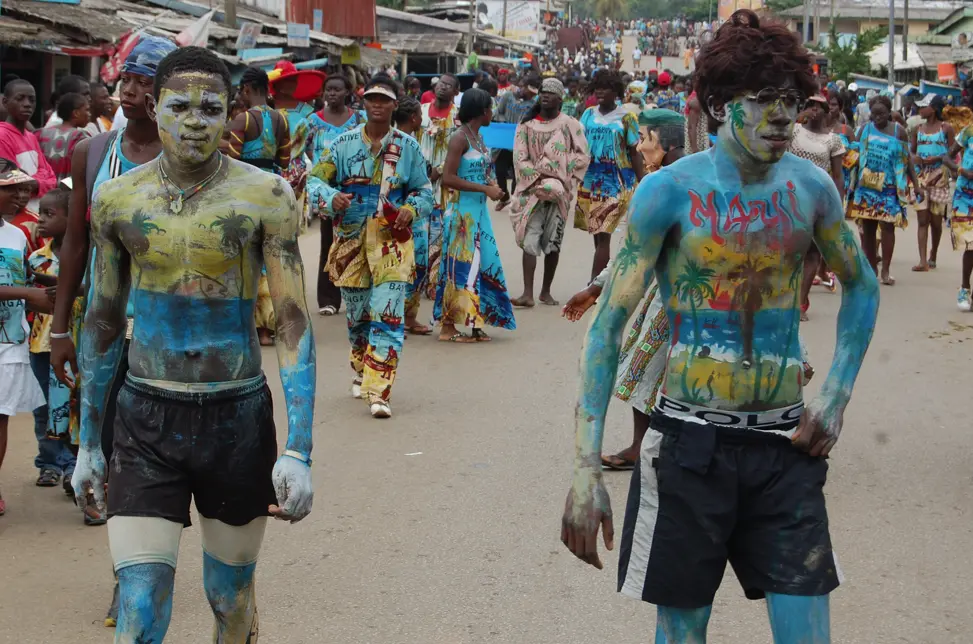
If you want to understand the soul of Kribi, you cannot look solely at the concrete of the port or the asphalt of the new highways. You must look to the water, and specifically, to the month of May, when the ocean becomes a stage for the Batanga people. This is the time of the Mayi Festival, a vibrant, raucous, and deeply sacred celebration that marks the return of the Batanga exiles and honors the spirits of the sea.
Thank you for reading this post, don't forget to subscribe!The Mayi Festival is more than a holiday; it is an assertion of identity. It is a week where the modern city of Kribi peels back its layers to reveal the ancient fishing village that lies beneath.
The Historical Roots: A Story of Exile and Return
To understand Mayi, one must understand the trauma of 1916. During the First World War, as French and British forces clashed with the German colonizers in Cameroon, the Batanga people were caught in the crossfire. Accused of aiding the enemy, thousands were forcibly evacuated by the French administration to the southwest region of Cameroon, specifically around Limbe and the foot of Mount Cameroon.
It was a time of immense suffering. Many died from disease, starvation, and the heartbreak of displacement. However, in 1916, the survivors were finally allowed to return to their ancestral lands in Kribi.
The “Mayi” (which simply means “May” in the local tongue, referring to the date of return, May 9th) commemorates this homecoming. It is a festival of survival. It is a thanksgiving to the ancestors who guided them home and a promise to never lose their land again.
The Descent of the Spirits
While the historical context provides the reason for the gathering, the spiritual dimension provides the energy. The festival begins with secret rites performed by the secret societies. The most anticipated public event is the communion with the Mami Wata or water spirits.
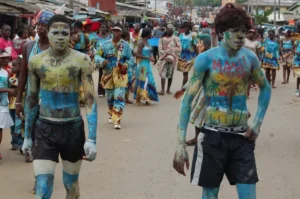
Dressed in traditional raffia skirts, with bodies painted in kaolin white—the color of the spirit world—initiates dance to the hypnotic rhythm of the drums. The “descent” into the water is a pivotal moment. A chosen dignitary or priest enters the ocean to offer gifts. The community watches in hushed silence; the calmness of the waves is interpreted as acceptance, while rough waters might signal ancestral displeasure.
The Pirogue Races: Kribi’s Formula One
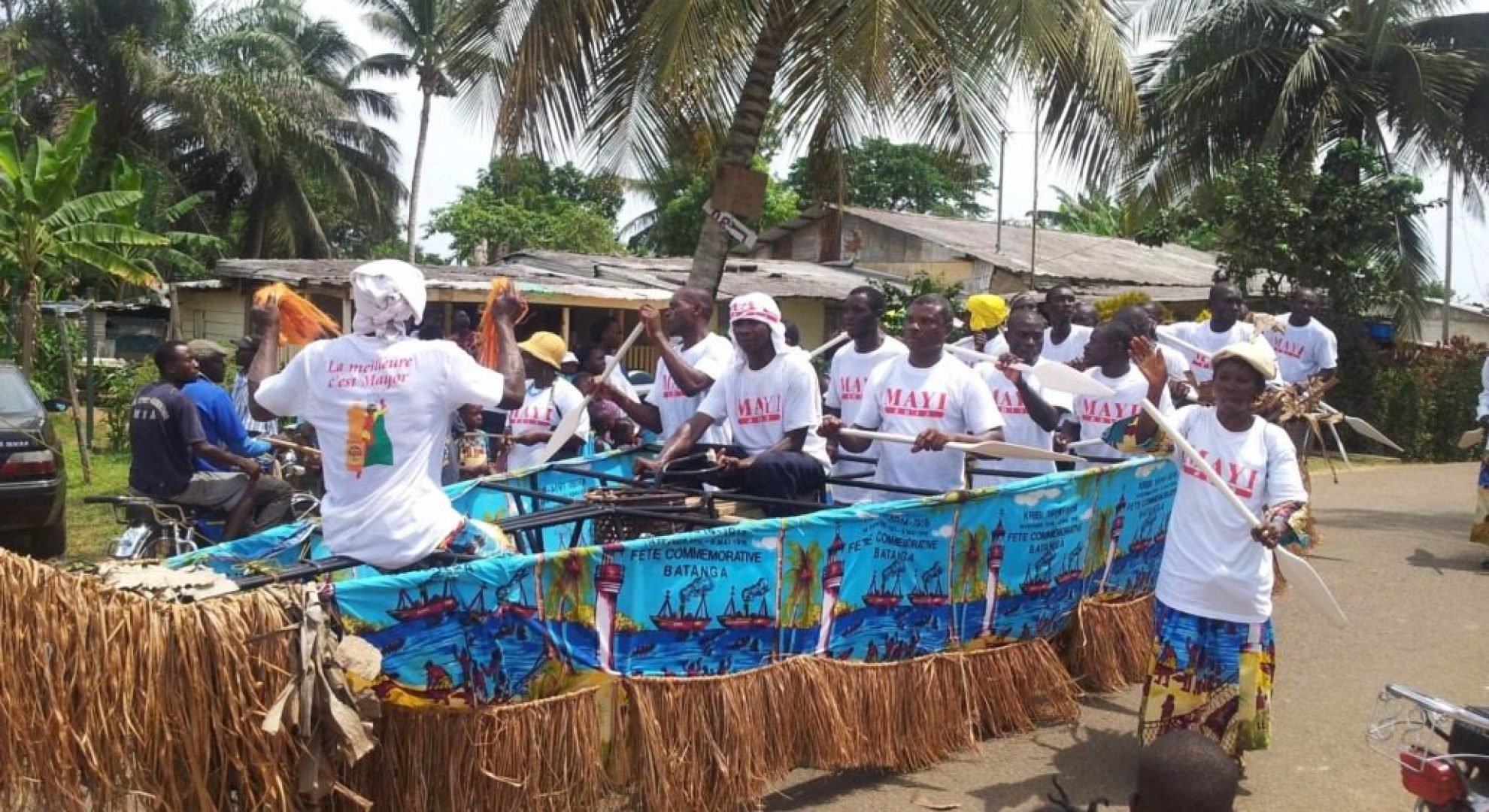
If the spiritual rites are the soul of Mayi, the pirogue races are its heartbeat. This is the main spectacle that draws crowds from Douala, Yaoundé, and beyond.
The Batanga are master boat builders and navigators. The racing pirogues are distinct—long, incredibly narrow, and carved from single tree trunks. They are designed for speed, not stability. Teams of rowers, often representing different clans or villages (such as Lobe, Bwambe, or Mboamanga), paddle with frantic, synchronized precision.
“It is not just about muscle,” explains Jean-Paul, a former champion rower who now coaches a youth team. “It is about the rhythm. You must breathe together. If one man is out of sync, the boat tips. The ocean does not forgive mistakes.”
The rivalry is intense. Winners gain bragging rights for the entire year, and the winning village is seen as having the favor of the water spirits. The sight of twenty men digging their paddles into the surf, muscles straining, while thousands cheer from the beach, is the defining image of Kribi cultural life.
The Queen of Mayi
In recent decades, the festival has evolved to include the election of the “Miss Mayi” or the Queen of the festival. While this may seem like a modern beauty pageant, it is rooted in cultural preservation. The contestants are judged not just on appearance, but on their knowledge of the Batanga language, their skill in traditional cooking (such as the preparation of Mokwa), and their ability to perform traditional dances like the Ivanga.
The Queen becomes an ambassador for the culture, bridging the gap between the elders and the youth who are increasingly influenced by the internet and global culture.
Preserving the Flame
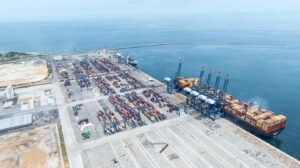
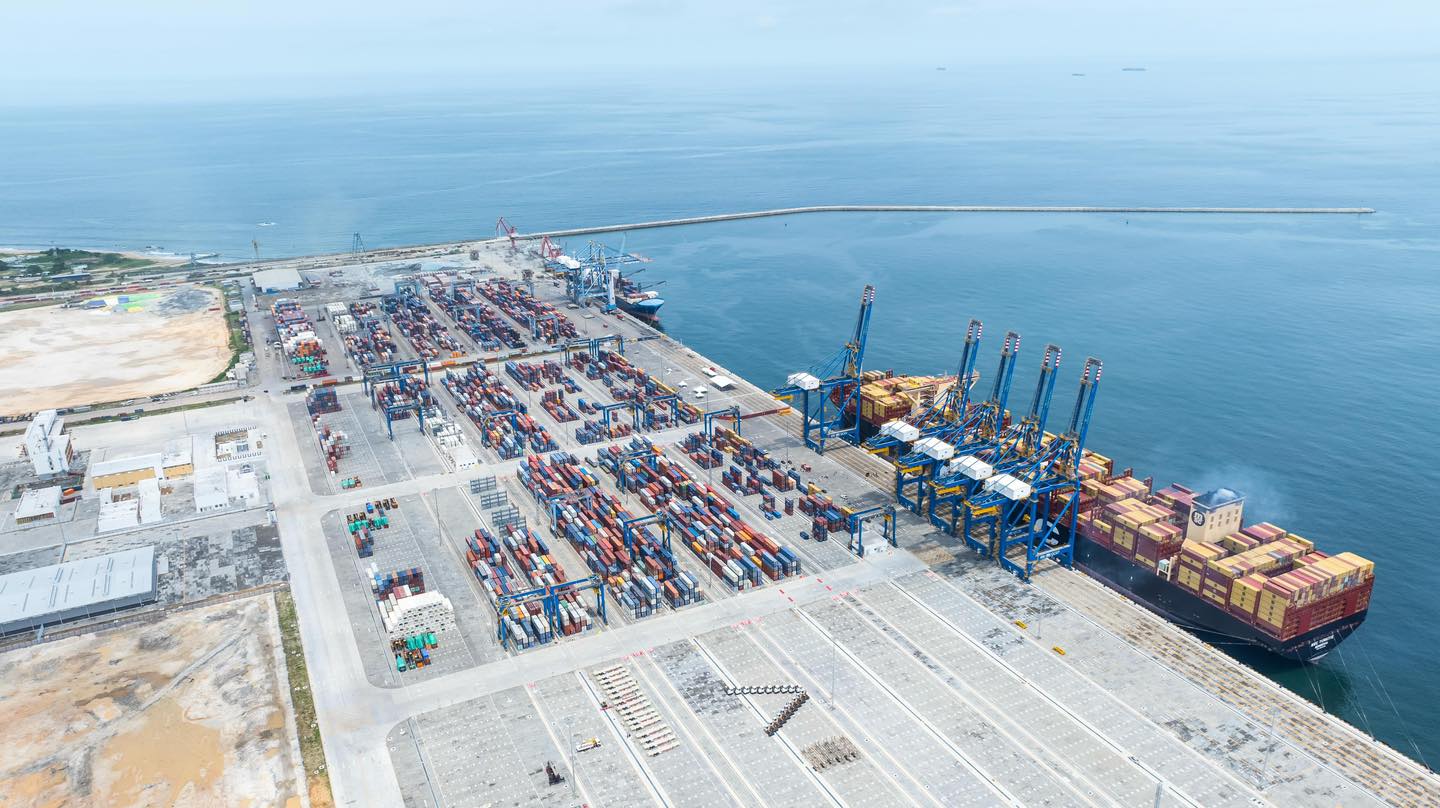
Today, the Mayi Festival faces the challenge of staying relevant in a rapidly industrializing city. As Kribi becomes a global economic hub, there is a risk that Mayi could become “folklorized”—a show for tourists rather than a genuine rite of passage.
However, the organizers are adamant that the core remains unchanged. “The Port brings ships, but Mayi brings us together,” says a local community leader. “As long as the Batanga live by this sea, we will race, we will dance, and we will remember.”For the visitor in Kribi, the Mayi Festival is a chaotic, colorful, and welcoming explosion of life. It is a reminder that before this city was a port, it was a home.